1. Hardware Foundation: Rear Projection Film + High-Brightness Projector for 3D holographic Displays
Using 3D holographic technology enhances customer engagement and showcases products like never before.
- Apply Rear Projection Film
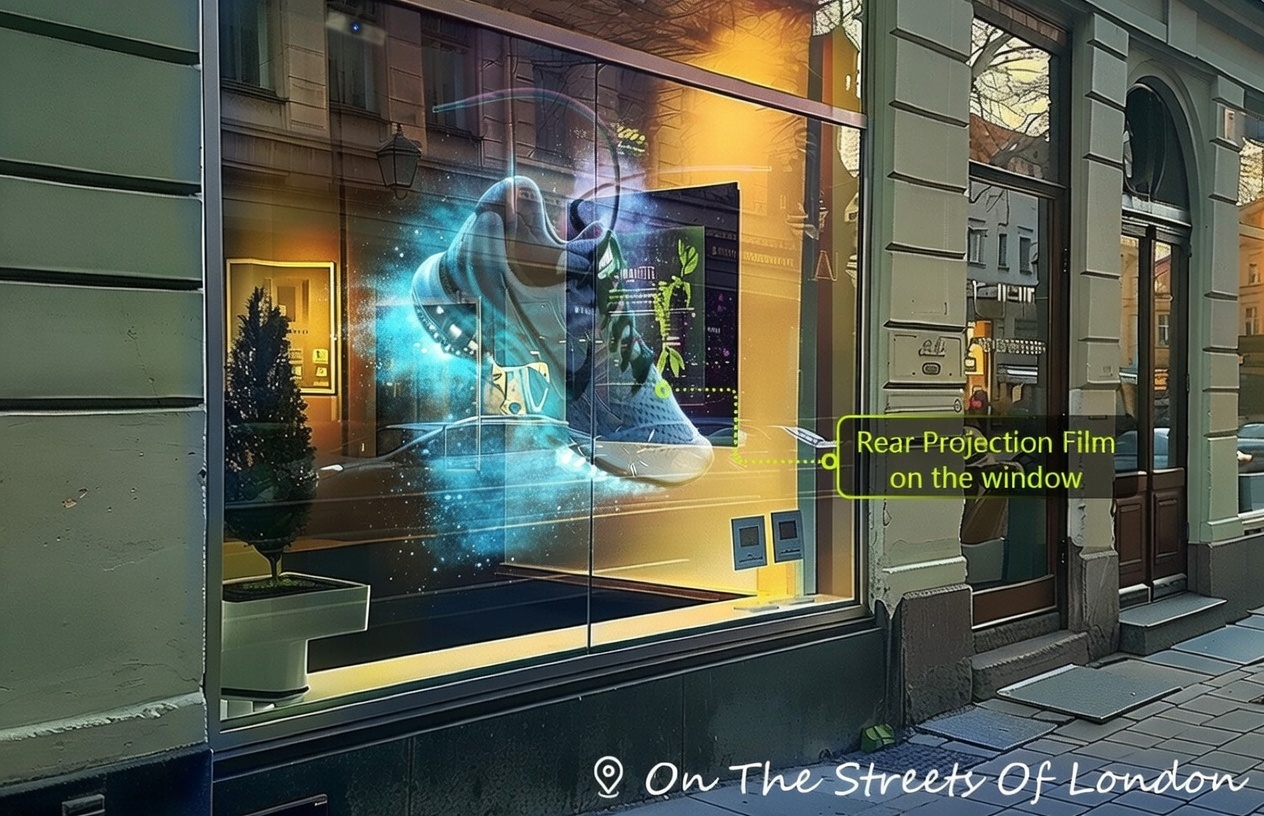
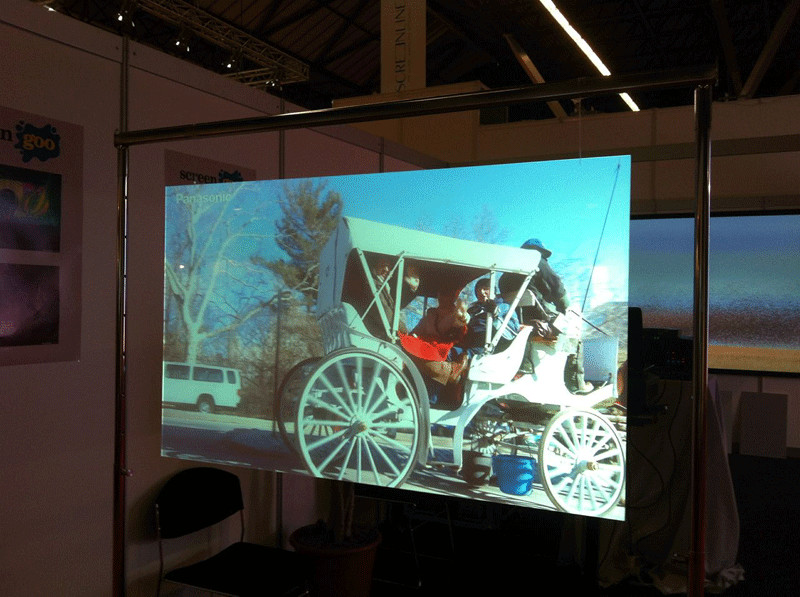
Choose high-contrast grey or fully transparent holographic film (almost invisible during the day, extremely bright at night). Apply it directly to the inside of the glass (projected from inside the store), popular brands include Glimm Glassfire, Pro Display, or Screen Solutions specialized films.
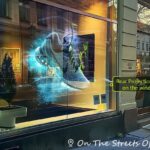
Effect: The glass becomes a “floating projection screen,” making the image appear suspended in mid-air. Here are typical rear projection film working principle and installation examples (projected from inside the store → viewers outside see the 3D illusion):
This method creates stunning 3D holographic displays that captivate audiences.

- Projector Selection
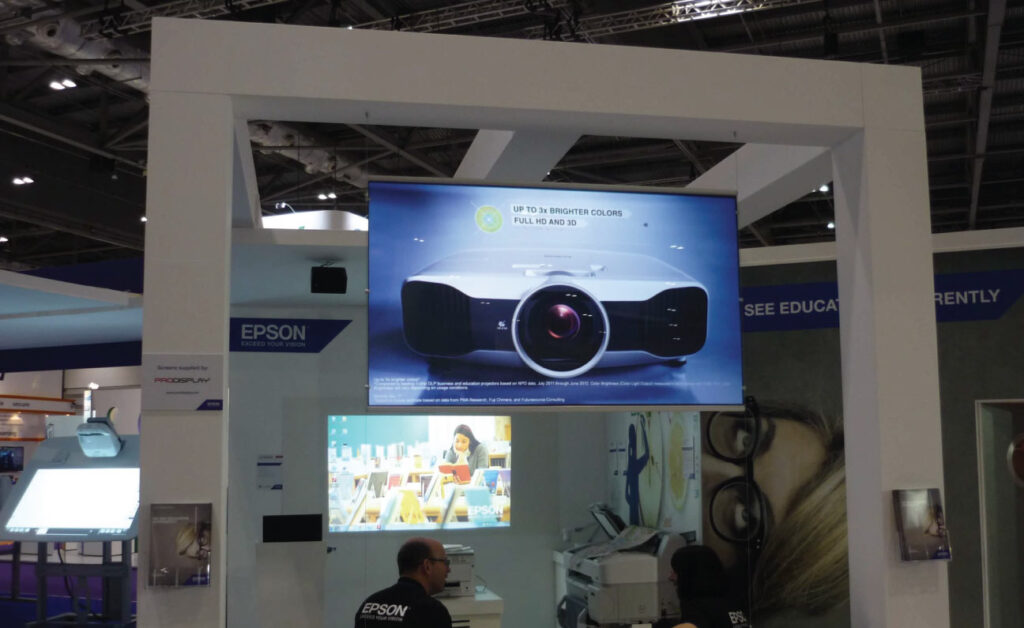
Must use a high-lumen laser projector (8,000–20,000+ ANSI lumens), preferably short-throw or ultra-short-throw lens (short projection distance to save indoor space).
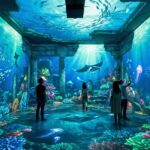
Recommended brands: Christie, Barco, Panasonic, or high-end Epson laser models. Brightness is critical at night; daytime requires even higher lumens + high-contrast film. Common in-store projector setup example (projector hidden in ceiling or cabinet):
High-lumen laser projectors are essential for creating effective 3D holographic visuals.
Developing content specifically for 3D holographic experiences requires tailored techniques.
2. Content Creation: 3D Animation + Projection-Specific Optimization
- Software Tools
- Modeling & Animation: Cinema 4D (most commonly used) + Redshift/Octane rendering, or Blender (free and powerful).
- Particles/Effects: Houdini (professional particle explosions, energy fields), After Effects (quick neon trails, glow compositing).
- Projection Correction: Resolume Arena or MadMapper (real-time warping, edge blending, masking to perfectly fit the glass perspective).
- AI Assistance: ReelMind.ai or similar tools for fast texture/animation prototyping.
- Production Steps
3D holographic models can be created using tools like Cinema 4D for high-quality animation.
Incorporating 3D holographic effects can elevate your project to the next level.
Utilizing software for projection correction is crucial for achieving stunning 3D holographic presentations.
- Measure the actual glass dimensions and viewer perspective (use camera or laser distance meter).
- In 3D software, create a virtual camera matching the real projector’s angle (to avoid distortion).
- Model the sneaker (or product) → Apply materials (metallic, emissive, reflective) → Animate (rotate, scale, disassemble, reassemble).
- Add cyberpunk elements: particle systems (blue-purple energy particles bursting), neon glows, scan lines, holographic glitches.
- Render as a seamless loop video (15–60 seconds, 16:9 or custom aspect ratio).
- Export in high resolution (4K+), import into Resolume for final keystone correction and masking (hide unwanted areas). 3D animation workflow concept (from modeling to particle effects, then projection output):
3. Complete Implementation Tips (to make it “look like it’s really bursting out of the glass”)
- Best at night: Control ambient light, turn off unnecessary store lights so the projection becomes the only light source.
- Perspective Illusion: Design content so the sneaker “breaks through” the glass frame, with particles spilling into the real-world edges for depth.
- Seamless Loop: Animation length 15–60 seconds, perfectly looped to avoid noticeable repeats.
- Test & Iterate: After on-site projection, fine-tune brightness, color, and warping until it’s subtle in daylight and explosive at night.
- Cost Range: Film materials from a few thousand to tens of thousands HKD, projector rental/purchase 100k–500k HKD, content production outsourced around 50k–300k HKD (depending on complexity).
This effect is extremely common for brand pop-ups, product launches, and luxury stores. Once done, passersby will automatically shoot Reels and go viral for you! If you have specific glass dimensions, budget, or want to focus on certain software, I can provide a more precise step-by-step list or supplier recommendations. ✨
Ready to turn your storefront into the next viral cyberpunk landmark? 🚀
When showcasing products, 3D holographic displays are best utilized in low-light environments.
Designing for 3D holographic effects involves creating depth and perspective illusions.
For optimal results, ensure your animation is perfectly looped for a 3D holographic display.
Transform your marketing strategy with the power of 3D holographic technology.