By the MR Event Planner production team · Updated 28 November 2026 · Reading time about 7 minutes
Quick answer
Projection mapping in Hong Kong typically runs from about HK$30,000 for a one-day indoor launch with two projectors to HK$200,000 or more for a blended multi-projector facade show. Projector count, content production, rigging and crew days drive the number more than any single line item.
Almost every enquiry we receive starts with the same question: how much does projection mapping cost? The honest answer is that the projector hire is usually the smallest of five cost lines, and the client who budgets only for hardware is the client who runs out of money in the rehearsal week.
This breakdown shows how a projection mapping budget is actually built in Hong Kong. The figures are indicative market ranges for equipment and labour, not a quotation. A real number needs a venue survey, a surface measurement and a confirmed schedule, because all three change the equipment count.
Prices here are stated as ranges with the assumption behind each one, so you can see which lever moves the total. Where a number depends on projector model, throw distance or venue access, it is written as a range rather than a single figure.
Key takeaways
- Five lines drive the budget: projectors, playback and media server, content production, rigging and power, crew and transport.
- A 15,000-lumen class laser projector rents at roughly HK$2,000 to HK$3,000 per unit per day in Hong Kong, depending on model and lens.
- Content production is frequently 30 to 50 percent of a facade or brand-film budget, and it is the line most often underestimated.
- Crew at roughly HK$2,000 to HK$3,000 per person per day, plus truss at HK$150 to HK$250 per metre, adds up fast across multi-day builds.
- The cheapest way to control cost is to fix the surface, the projector position and the content length before the site visit, not after.
What actually drives the cost of a projection mapping project?
Five lines drive almost every projection mapping budget: projector count and class, playback hardware and media server, content production, rigging and power, and crew plus transport. Of these, only the first is a simple multiplication. The rest scale with time on site, which is why schedule discipline saves more money than hardware negotiation.
Projector count is set by physics, not preference. Surface area divided by the coverage of one unit at the target brightness gives a starting figure, and blend overlap between adjacent units adds 10 to 15 percent to that count. Everything downstream, from truss length to crew size, follows the unit count.
Content production is the line that surprises clients. A mapping film is built to a masked canvas that matches the architecture, so nothing can be designed until the surface is measured, and every design revision costs editing time. A three-minute facade film is not three minutes of work; it is weeks of build, versioning and on-site adjustment.
What does not drive cost is the brand on the projector. Two units of equal brightness from different manufacturers solve the same problem at a similar daily rate. Money is better spent on one class higher in brightness or one extra day of rehearsal than on a logo.
If you want to see how these lines combine on real projects, our portfolio shows the range of surfaces we have mapped, from indoor product launches to harbourfront facades.
- Projector quantity and brightness class, including spare units for critical cues
- Playback: media server, redundant playback, timecode and show control
- Content: design, animation, masking, versioning and on-site tuning
- Rigging and power: truss, hoists, cabling, distro and generator hire
- People and logistics: technicians, riggers, transport trips and load-in windows
How much does the projector hardware add to the budget?
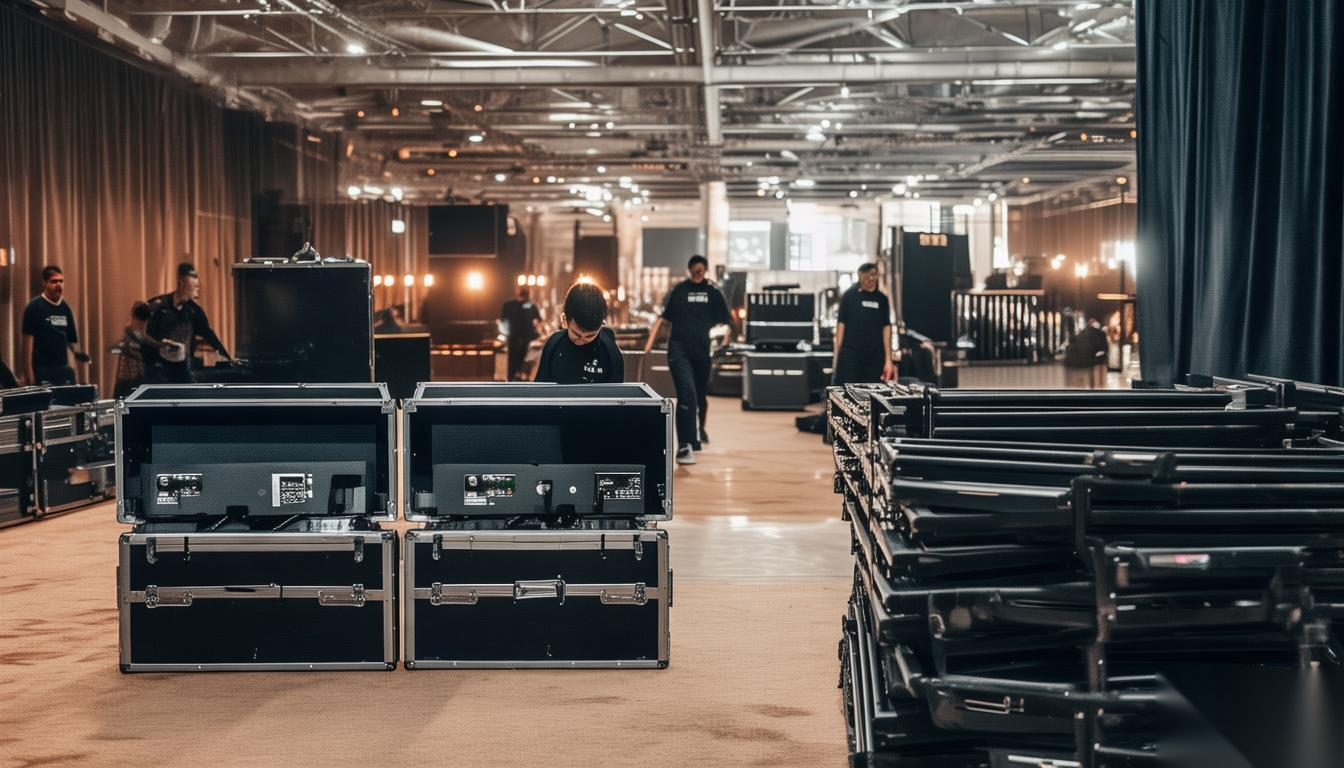
In Hong Kong a 15,000-lumen class laser projector rents at roughly HK$2,000 to HK$3,000 per unit per day, depending on model, lens and whether the unit needs a weatherproof housing. Higher-output units and long-throw lenses sit at the top of that range; multi-day bookings usually attract a better daily rate than a single show day.
That daily rate looks modest until you multiply it by unit count, build days and rehearsal days. A four-day booking of eight units is thirty-two unit-days before any spare, which is why a modest change in required brightness can move a budget by tens of thousands of dollars.
Unit count is decided by the surface. At 150 lux on a dark night surface, one 15,000-lumen unit covers roughly 100 square metres; a surface in ambient light or with a dark, rough finish needs more. Our guide to projector brightness for projection mapping walks through that arithmetic in detail.
Lenses and blending are part of the hardware line, not a rounding error. Each blended edge needs overlapping output, a lens capable of the throw distance, and a technician who can align it, so a wall split into four zones carries four times the alignment labour.
| Surface area | Target illuminance | 15,000-lumen class units | Indicative hire per unit per day |
|---|---|---|---|
| 100 m² | 150 lux | 1 | HK$2,000 – 3,000 |
| 250 m² | 150 lux | 2 | HK$2,000 – 3,000 |
| 500 m² | 120 lux | 3 – 4 | HK$2,000 – 3,000 |
| 1,000 m² | 100 lux | 7 – 8 | HK$2,000 – 3,000 |
| 2,000 m² | 80 lux | 11 – 12 | HK$2,000 – 3,000 |
Why does content production often cost more than the projectors?
Content production is routinely 30 to 50 percent of a facade or brand-film budget, and on complex surfaces it can exceed the entire hardware line. The reason is that a mapping film is engineered to a measured surface, so the canvas, the safe zones and the timing all have to be built before a single frame is designed.
A mapping film is quoted by finished length, resolution and complexity, not by the hour. A three-minute piece built for a 4K-wide blended canvas involves concept, storyboard, animation, sound design, masking tests and at least one full version at the final resolution. Each revision after the first on-site rehearsal costs more, because it has to be re-rendered and re-checked against the wall.
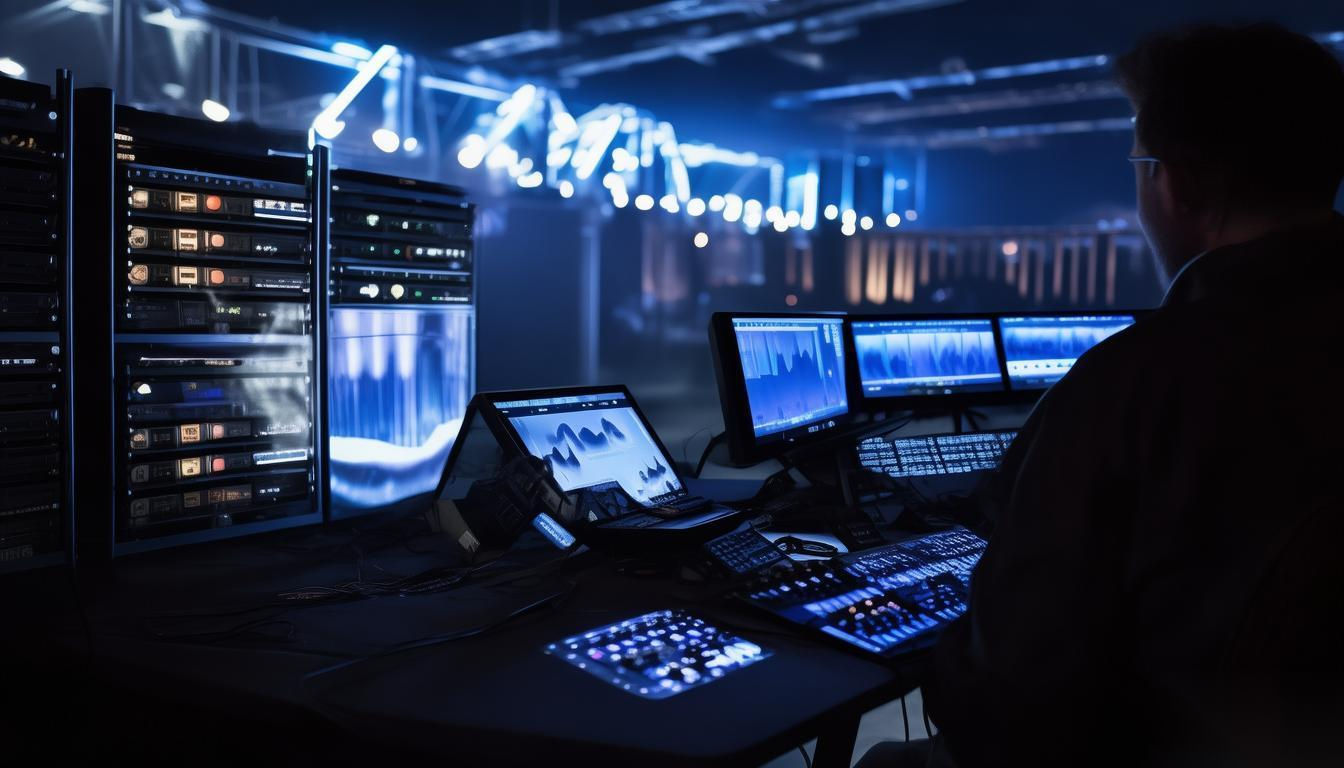
Playback is a separate line. A media server capable of timecode, multi-output playback and edge blending rents by the day alongside the projectors, and a redundant playback unit is worth budgeting for any show with a live audience. Where a show is repeated nightly, the server and the operator stay for the run.
The practical advice is to lock the surface and the show length first. A confirmed wall measurement and a fixed film duration remove most of the variables that make content quotes swing, and let animation run in parallel with rigging instead of after it.
What do rigging, power and crew add to the bill?
Rigging and crew typically add 40 to 60 percent on top of the projector line. Truss runs at roughly HK$150 to HK$250 per metre depending on section size and hoist requirement, technicians at roughly HK$2,000 to HK$3,000 per person per day, and transport at roughly HK$2,000 to HK$5,000 per trip depending on distance, vehicle size and access.
Power is a line that gets discovered late. A large projector stack plus a media server and distro can exceed what a venue will release from house power, so a generator or a dedicated supply is hired in, and on some sites a temporary distribution board with its own cable run is required. That work is quoted by the electrical contractor, not by the AV supplier, and it needs to appear in the budget before the equipment list is finalised.
Height adds compliance cost. Work at height needs certified riggers, harnesses and often an RSE submission, and a venue with restricted load-in hours forces more crew into fewer hours, which raises the labour total. A single-lift-window venue can cost more in crew than a venue with a generous build day.
For sites with tight power, the cheapest engineering decision is often to reduce the number of separate locations rather than the number of projectors: one stack, one distro, one cable run, one technician position.
- Truss and hoists quoted by the metre, including motors where the rig needs to fly
- Certified riggers and harness work at height, with RSE where the venue requires it
- Temporary power: distro board, cabling, and generator hire where house power is short
- Transport trips in and out, including the second trip most venues forget to budget
- Public liability cover and any venue-mandated insurance certificate
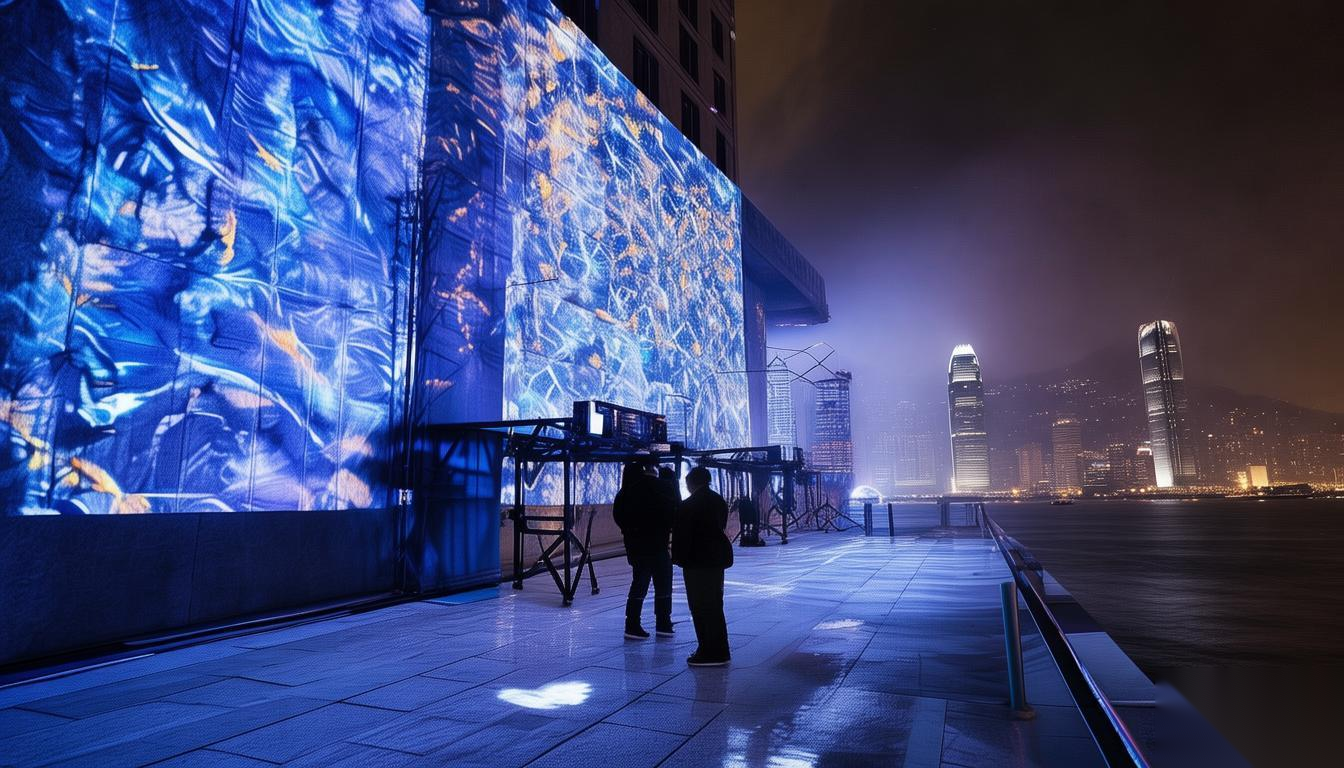
How much does a whole show cost at three typical scales?
The table below applies the day rates above to three show sizes we build regularly in Hong Kong. It covers equipment and labour only: projectors, playback, truss, crew and transport. Content, permits, insurance and venue charges sit outside these envelopes and vary too widely to fold into a single number.
Read the ranges as the equipment-and-crew envelope you should reserve before content is quoted. A one-day indoor launch with a small canvas is achievable inside the first band; a facade show with eight blended units and a four-day build lands in the third, and the content for it can add a comparable amount again.
Each band assumes a night-time show, a surface with reasonable reflectance and a venue that releases power. Daylight, dark rough concrete and a two-hour load-in push any band upward.
| Show scale | Surface and units | Build and crew | Indicative equipment and labour |
|---|---|---|---|
| Indoor product launch | 100 m², 2 units | 2 days, 3 technicians | HK$25,000 – 40,000 |
| Outdoor stage or brand activation | 400 m², 4 units | 3 days, 5 technicians | HK$65,000 – 100,000 |
| Building facade show | 1,000 m², 8 units | 4 days, 6 technicians | HK$130,000 – 200,000 |
Where do projection mapping budgets usually blow up?
Budgets blow up on site, not in the quotation. The four recurring causes are late venue access, an under-estimated power requirement, a surface that is not flat, and content changes made after the first rehearsal. Each one converts into extra crew days, and crew days are the most expensive unit in the whole project.
Late access is the most common. A venue that confirms a 22:00 load-in and then opens at 23:30 removes an hour from a build that was already tight, and the fix is overtime or a second night. Both are billed.
Surface surprises cost less in money than in schedule. A facade with deep recesses, protruding signboards or a curved corner needs more projector zones and more masking work than the photograph suggested, and the change order arrives after the equipment has been ordered.
Content changes after rehearsal are the quiet killer. Once a film has been rendered at final resolution and aligned on the wall, a change to a logo, a date or a sequence forces a re-render, a re-align and often a second rehearsal. Freezing creative one week before the first rehearsal is the single most effective cost control on a mapping project.
- Venue access shorter than planned, forcing overtime or an extra build night
- Power shortfall discovered at load-in, requiring a generator or distro board
- Surface geometry that needs more zones than the original unit count
- Creative changes after the on-site rehearsal, requiring re-render and re-align
- Wet weather with no contingency night in the schedule
How do you reduce projection mapping cost without wrecking the show?
The biggest savings come from decisions made before the site visit. Fixing the surface, the show length and the projector position early removes the re-work that inflates every later line, and it lets content, rigging and power planning run in parallel instead of in sequence.
Reducing projector positions is usually cheaper than reducing projectors. Two units stacked in one position share a distro, a truss point, an alignment session and one technician; in two locations they double all of it.
Reusing a content architecture also pays. A template built around a 4K blended canvas can serve several events with new art direction rather than a full rebuild, which cuts the content line substantially for a repeat client. Brands that run quarterly activations often budget one master build and two lighter re-skins.
Finally, match the technology to the light. Projection wins on large surfaces at night and on irregular architecture. Where the audience sits in daylight or the surface is small, an LED wall at P2.84 is often the more economical and more reliable answer, at roughly HK$800 to HK$1,200 per square metre per day for the panel.
If you want a figure for a specific venue, send us the surface dimensions, the show date and the access window through our contact page, and we will come back with a unit count and a schedule before quoting. What we deliver, from survey to strike, is set out on our services page.
Frequently asked questions
How much does projection mapping cost in Hong Kong?
A one-day indoor launch with two projectors typically lands around HK$25,000 to HK$40,000 for equipment and crew. A four-day facade show with eight blended projectors typically runs HK$130,000 to HK$200,000, before content production, permits and insurance are added.
Is projection mapping cheaper than an LED wall?
It depends on surface size and ambient light. For a large surface viewed at night, projection is usually cheaper per square metre because a few projectors cover a wall that would need hundreds of LED panels. In daylight or for a small screen, an LED wall at P2.84 is usually the better value.
How many projectors do I need for a 10-metre-wide wall?
A 10 by 5 metre wall is 50 square metres. At 150 lux on a dark night surface one 15,000-lumen class projector covers roughly 100 square metres, so a single unit is enough for brightness; a second unit is added when the aspect ratio, throw distance or blend shape requires it.
Is content production included in a projection mapping quotation?
Not by default. Equipment and labour are quoted separately from content, because content is priced by finished length, canvas resolution and complexity. Content is commonly 30 to 50 percent of a facade budget and should be requested as its own line item.
Can projection mapping work in daylight?
Only in controlled indoor light. Projection needs a surface darker than the ambient light falling on it, so outdoor daytime shows are not practical with rental-class projectors. Outdoor work is scheduled after dusk, and indoor venues need their house lighting dimmed or zoned.
How far in advance should I book a projection mapping show?
Four to six weeks is comfortable for an indoor show with existing content. A facade show with new content needs eight to twelve weeks, because the survey, content build and rehearsal all sit in sequence. Peak event months in Hong Kong book out earlier.